


India Faces Weak Monsoon Season Ahead
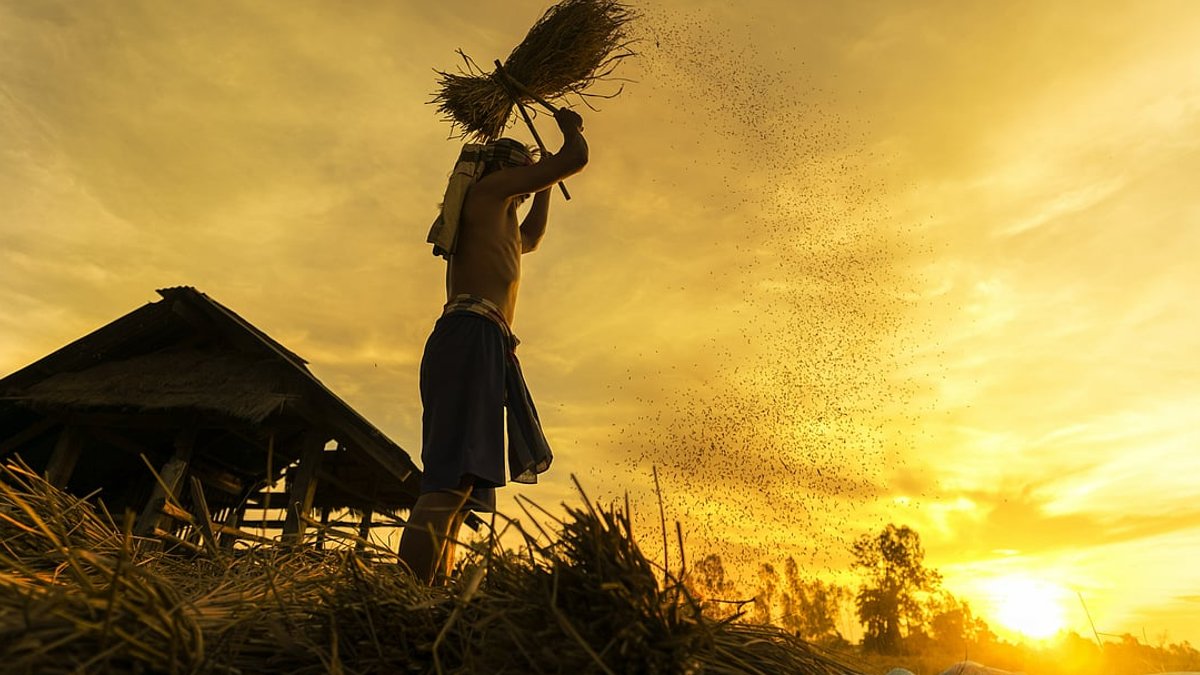
India’s monsoon season is facing a significant challenge due to the impact of El Niño, which can reduce vegetable output and trigger sharp price spikes.
India recorded its fifth-driest June since 1901, with rainfall nearly 40% below the long-period average.
The stalled monsoon, driven by an intensifying El Niño, has severely delayed summer crop sowing and threatens agricultural output, raising concerns over farm incomes, food inflation, and the broader rural economy.
El Niño is a climate phenomenon characterised by above-normal sea surface temperatures in the central and eastern equatorial Pacific Ocean.
According to Krishnan Raghavan, Director, Indian Institute of Tropical Meteorology, “The weakening of the Walker Circulation and the trade winds leads to anomalous sinking air and higher-than-normal atmospheric pressure over South Asia, including India.
These conditions suppress cloud formation and convection, weaken the southwest monsoon circulation, and reduce rainfall.
Current projections suggest that the developing 2026 El Niño could become a strong event.
However, the strength of El Niño alone does not determine India’s monsoon outcome.
The 1997 event offers a striking example, where despite the exceptionally strong El Niño, India received near-normal monsoon rainfall because a positive Indian Ocean Dipole developed alongside it.
Related: M&A for Private Business Owners: How Atomic Capital Designs and Delivers Complex Transactions
A severe monsoon deficit would affect agriculture through multiple channels, as reduced rainfall lowers soil moisture, directly constraining crop growth, particularly for kharif crops that depend heavily on monsoon precipitation.
Indranil Pan, Chief Economist at Yes Bank, notes that “the greater concern is pulses and oilseeds, which are more vulnerable to rainfall shocks.
Global edible oil supplies are already under pressure as El Niño is disrupting production in other major producing regions.
Higher food prices are often assumed to benefit farmers, but India’s agricultural structure makes the reality more complex.
Most farmers cultivate small landholdings and produce only a limited marketable surplus, while remaining consumers of food, purchasing essentials from the market.
The implications of a severe monsoon failure extend beyond farm incomes.
Higher food inflation erodes overall rural purchasing power, leaving households with less money to spend on discretionary goods and services.
The story of India’s monsoon may begin thousands of kilometres away in the Pacific Ocean, but its ultimate impact is measured much closer to home, in the fields farmers cultivate, the prices households pay, and the resilience of an economy that still depends, in many ways, on the rains.
For instance, a comparison with the 1997-98 El Niño event shows that despite the strong El Niño, a positive Indian Ocean Dipole helped mitigate its impact on India’s monsoon, a factor that could influence the outcome of the current monsoon season, as it affects the defense spending in relation to future challenges.

Trump's Push for Record Defense Spending on Future Wars


