


Alibaba Stock Soars on T-Head IPO Plans
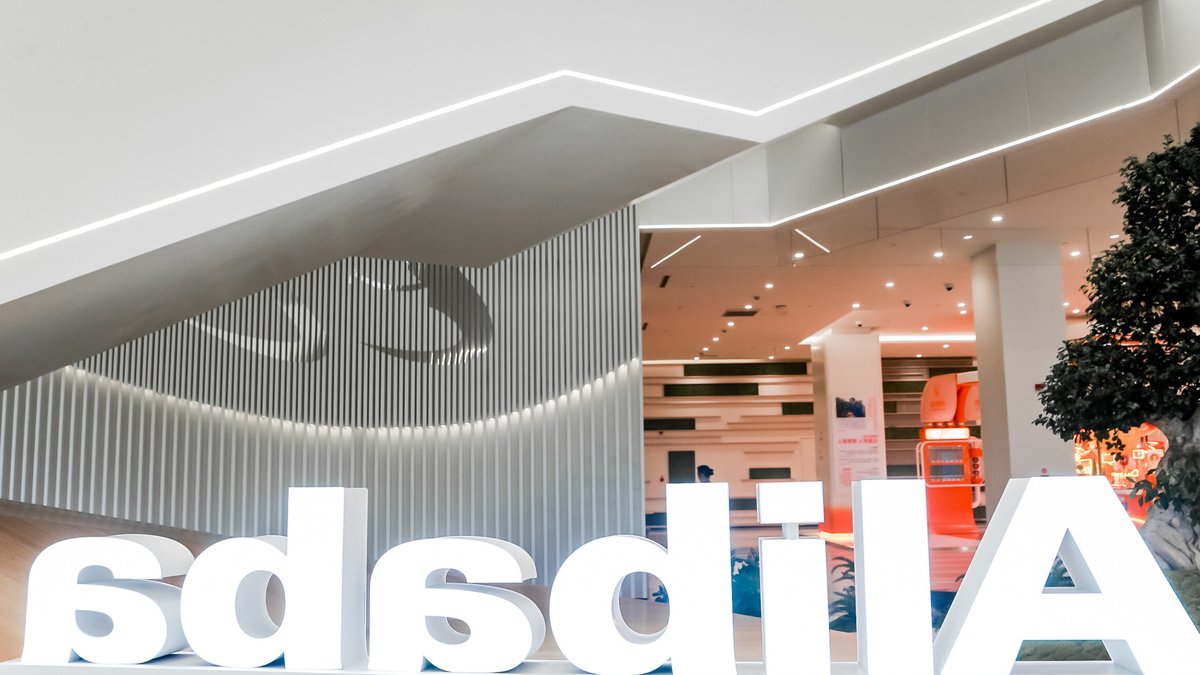
Alibaba stock (NYSE: BABA) surged sharply in U.S. trading on reports that the company is advancing plans to spin off and list its semiconductor unit, T-Head, also known as Pingtouge. The move aligns with a broader trend among Chinese tech firms seeking to capitalize on soaring demand for domestic artificial intelligence infrastructure amid U.S. export restrictions on advanced chips.
T-Head’s Restructuring and IPO Plans
Once an internal research division focused on custom chip design for Alibaba Cloud and e-commerce platforms, T-Head is undergoing a strategic transformation under CEO Eddie Wu’s “AI-first” vision. The unit will first be restructured into an independent business with partial employee ownership, aiming to align chip engineers’ incentives with market performance. Following this restructuring, Alibaba intends to launch an Initial Public Offering, potentially tapping into the January tech listing boom in Hong Kong and mainland markets.
The primary driver for the IPO is the urgent need for domestic alternatives to U.S. semiconductors. With export controls limiting access to high-end Nvidia accelerators, T-Head has positioned itself as a key player in China’s chip ecosystem. The unit recently showcased its Parallel Processing Unit (PPU), an AI accelerator designed for large-scale inference tasks, which reports suggest matches the performance of Nvidia’s H20 chip—the most powerful GPU permitted for sale in China—while costing roughly 40% less to produce.
T-Head recently secured a major contract with China’s second-largest wireless carrier to deploy its Pingtouge AI accelerators in a large data center in northwestern China, signaling growing commercial traction for its technology.
Alibaba’s AI-Driven Transformation
Alibaba’s broader strategy emphasizes aggressive investment in AI infrastructure and applications. In fiscal Q2 2026, the company reported a 34% year-over-year increase in cloud revenue, up from 26% in the prior quarter, with management explicitly attributing the acceleration to surging demand for AI computing services. AI-related product revenue posted its ninth consecutive quarter of triple-digit year-over-year growth, showing the monetizable potential of the technology.
The company has allocated approximately 120 billion yuan to AI and cloud infrastructure over the past year, with an initial commitment of 380 billion yuan over three years that management now views as potentially too conservative. During its earnings call, CEO Wu stated the firm is “in an investment phase to build long-term strategic value in AI technologies and infrastructure.”
Alibaba reports strong returns on its AI investments, noting it is already breaking even on AI-related spending within its e-commerce operations. In October 2025, Vice President Kaifu Zhang, who leads e-commerce AI applications, told reporters that AI-deployed tools contributed to a 12% rise in advertising spend returns, a “very rare” double-digit improvement that could significantly boost Gross Merchandise Volume during major shopping events.
The company has also expanded into consumer AI hardware, launching two variants of Quark AI glasses in November 2025. These devices function as hands-free interfaces to Alibaba’s ecosystem, enabling real-time translation, online shopping, and visual payments via Alipay integration. The launch intensifies competition with Meta’s Ray-Ban smart glasses and Chinese rivals like Xiaomi and Baidu, positioning the wearables as a “next-generation traffic gateway” to Alibaba’s platform.
In the developer community, Alibaba’s Qwen AI model has achieved significant traction, surpassing 700 million downloads on Hugging Face, making it the most widely used open-source AI system globally and outpacing competitors like Meta’s Llama and OpenAI’s models.
China’s Industrial AI Push
China‘s Ministry of Industry and Information Technology (MIIT) has released an action plan for the high-quality development of industrial internet platforms covering 2026 to 2028. This plan aims to bridge the gap between China’s massive industrial data and the power of AI, intending to cultivate “new quality productive forces” across the manufacturing sector.
The initiative supports China’s 15th Five-Year Plan (2026-2030), which signals a strategic pivot from new innovation (“zero-to-one”) to widespread application and scaling (“one-to-100”). By standardizing and boosting industrial internet platforms, China aims to secure its supply chains against global volatility and maintain its position as the most competitive and technologically advanced manufacturing hub globally.


