


Hormuz Strait Attacks Spike Tanker Rates, Threaten Trade Route
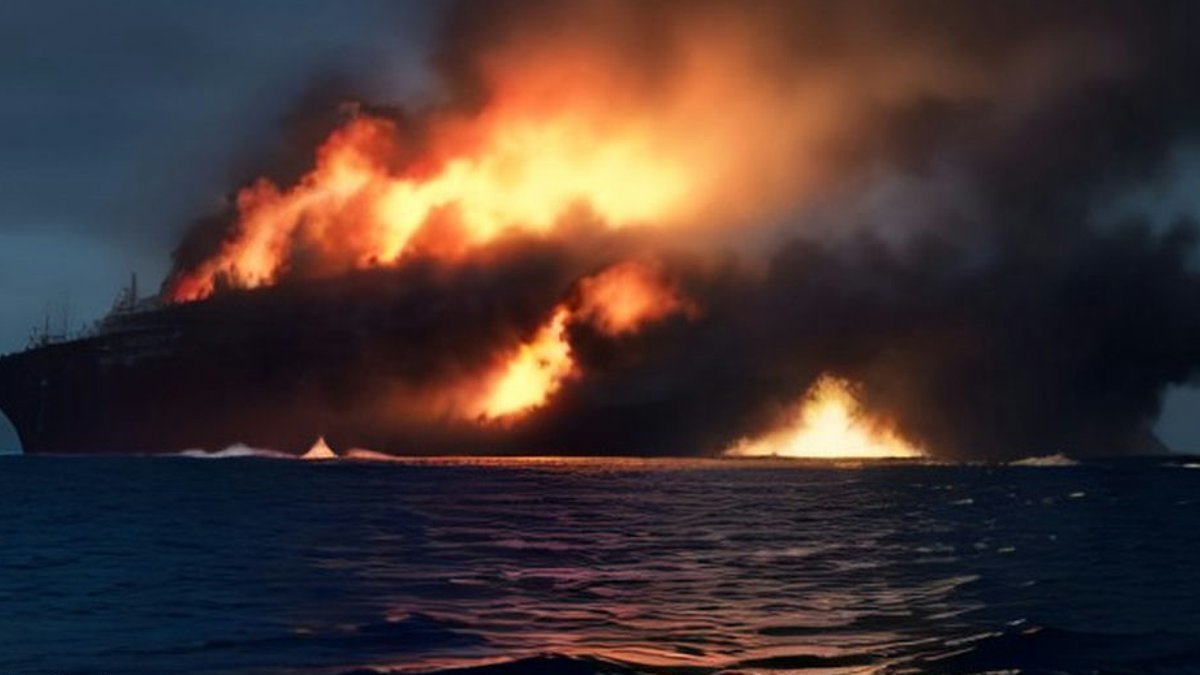
A surge in vessel incidents within the Strait of Hormuz has halted a downward trend in charter costs, while also casting doubt on the future of this strategic waterway. At least six tankers have been struck by mines or missiles throughout the week, including one vessel captured on video by local fishermen.
The video footage displayed a massive fire, and local reports state the crew abandoned ship instantly after the attack. With no opportunity to deploy lifeboats, the sailors were forced to leap directly into the ocean. They were subsequently recovered by a team from Oman.
Market impact
The Baltic Dirty Tanker Index, standing at 4812, increased by over 5% on November 19 compared to the prior day and has risen well above 7% since the week began. This increase is noticeable, though relatively small when viewed against current Very Large Crude Carrier rates. A report from last Friday showed the Middle East Gulf to China index down 188 points to WS1014, achieving a round-trip timecharter equivalent (TCE) of greater than $1.078 million per day for the standard Baltic VLCC.
Simultaneously, the Gulf of Oman to China rate fell 234 points to roughly WS311, equating to a TCE of $307,160. Additional VLCC indices were also lower, with West Africa to China decreasing 210 points to approximately WS288 and a round-trip TCE of $267,748 daily. The US Gulf to China rate also decreased, yielding a TCE of $247,973.
The resumption of fighting has stopped the recent sharp drop in crude oil prices, which saw a slight rise on Wednesday. Brent crude neared $93, gaining nearly 1% for the session, while West Texas Intermediate approached $84 before retreating later in the day.
Long-term implications
Regional energy producers have adopted alternatives, such as boosting pipeline shipments via Saudi Arabia’s East-West Pipeline to Yanbu and the United Arab Emirates’ pipeline to Fujairah on the Gulf of Oman.
Nonetheless, the Strait of Hormuz is unlikely to return to its former status as the primary global route for energy trade. In a guest essay for The Economist’s ‘The World Ahead 2027’ released on Wednesday, IEA Executive Director Fatih Birol remarked, “I don’t see any credible pathway back to the situation that existed in February 2026. Shipping flows through the Strait of Hormuz have been blocked once, with a hugely disruptive effect on oil and gas markets. It can happen again. Confidence in the Strait as a safe and reliable corridor for energy and other goods has been crushed.”


